


What Is Altitude Sickness and Why Does It Happen?
Altitude sickness or acute mountain sickness is an illness
where the body has trouble adjusting to the lower amounts of oxygen in the thin
air present at high altitudes. With increased altitude, air pressure decreases;
hence, there is less oxygen per breath. Although the oxygen content in the air
does not vary, low air pressure makes it difficult to obtain the oxygen the
body requires. Anyone can suffer from altitude sickness regardless of age or physical
fitness.
The majority of people usually start experiencing the
consequences of the altitude when they get above 2,500 meters (8,200 feet),
while some may begin to feel ill at a somewhat lower altitude. Some symptoms
include headache, dizziness, nausea, tiredness, breathlessness, and insomnia.
For the most part, people suffering from altitude sickness can be cured by
resting and adapting to the environment. Ignoring their symptoms and climbing
further, however, can result in HAPE (High Altitude Pulmonary Edema) or HACE
(High Altitude Cerebral Edema).
Nepal boasts of some of the highest trekking paths in the
world, such as Everest Base Camp Trek, the Annapurna Circuit Trek, and the
Manaslu Circuit Trek, hence altitude sickness emerges as one of the critical
health hazards for trekkers. The good thing is that altitude sickness is
completely preventable. You can lower the chances of being affected by
ascending slowly, giving yourself enough time to get acclimatized, drinking
plenty of water, abstaining from alcohol consumption, and identifying the early
signs of altitude sickness.
Common Symptoms of Altitude Sickness Every Trekker Should
Know
Signs of altitude sickness usually start off mild enough to be
confused by many mountaineers as just simple tiredness after a hard day on the
trail. The thing about identifying these early warning signals is that failure
to identify and act on them can lead to the symptoms developing quickly.
Whether your trip involves going up to Everest Base Camp, Annapurna Base Camp,
or even another mountain in Nepal, knowing the symptoms can prove very useful
when deciding on how best to handle the situation. These signs can vary from
one individual to another, but generally occur within 6 to 24 hours of being at
a higher elevation. Symptoms of altitude sickness include:
·
Chronic headaches that do not resolve with
adequate sleep and water intake.
·
Dizziness or a feeling of lightheadedness.
·
Nausea and vomiting.
·
Lack of appetite.
·
Uncommon fatigue and weakness.
·
Shortness of breath even at rest.
·
Trouble sleeping or insomnia and frequent
awakenings at night.
·
Faster than normal heartbeats.
·
Hands, feet, or facial swelling.
·
Inability to coordinate movements well and walk
normally.
·
Disorientation or confusion (a sign of severe
altitude sickness).
·
Difficulty breathing along with constant
coughing and chest discomfort (High Altitude Pulmonary Edema - HAPE).
·
Inability to maintain balance and inability to
walk straight.
·
Bluish or grayish discoloration of lips and
nails due to lack of oxygen in the blood.
·
Frothy or pink-colored mucus production from the
lungs in severe HAPE patients.
·
Extreme drowsiness or unconsciousness in
critical conditions.
How to Prevent Altitude Sickness While Trekking in Nepal
Prevention of altitude sickness is far more easy as compared
to its treatment once it occurs. Although altitude sickness can occur in
anyone, there are ways to avoid its onset by ensuring that all appropriate
trekking guidelines are followed. The world-renowned trekking trails of Nepal,
including Everest Base Camp, Annapurna Circuit Trek, and Langtang Valley Trail,
include altitudes where the amount of oxygen is far lesser as compared to that
at sea level. In order to acclimatize yourself to these circumstances, you need
to prepare your body adequately. Best ways to prevent altitude sickness while
trekking:
·
Gradually ascend and refrain from increasing the
altitude at which one sleeps by more than 300 to 500 meters daily once past
3,000 meters.
·
Make sure to include acclimatization days in
your plan.
·
Ensure that you have sufficient hydration during
your trip by drinking enough water.
·
Consume regular carbohydrate-rich meals to
sustain energy levels.
·
Avoid smoking and alcohol since they interfere
with your body's adaptation to high altitudes.
·
Do not take too many sleeping pills and
sedatives because they may affect your breathing during sleep.
·
Hike at your own pace, avoiding unnecessary
haste while trekking to your destination.
·
Be attentive to your health needs and do not
neglect any signs of the disease at its early stage.
·
Observe the "climb high, sleep low"
rule as long as it is possible according to your itinerary.
·
Rest sufficiently and avoid strenuous exercises
for the first few days when traveling to a high-altitude place.
·
Consult your doctor about preventive medication
for altitude sickness before going on your trip.
·
Trek with an experienced guide who would notice
any early signs of the disease and take appropriate action.
·
Always have a first aid kit, a pulse oximeter,
and necessary medications.
When Does Altitude Sickness Become a Medical Emergency?
Altitude sickness is quite common for treks done at a high
altitude in Nepal, but usually, it resolves by itself with some rest. But there
are cases when altitude sickness turns out to be dangerous and needs urgent
help and assistance. When you ignore the increasing problems or decide to
continue climbing even if you feel ill, you risk developing more serious forms
like High Altitude Cerebral Edema or High Altitude Pulmonary Edema, both of
which require immediate medical care and descent to a low altitude.
Understanding the signs of serious altitude sickness can save your health or
even your life. The signs of serious altitude sickness:
·
Severe headaches that persist and fail to
improve despite the use of medication or rest.
·
Confusion or strange changes in behavior.
·
Difficulty maintaining balance while walking
(ataxia).
·
Drowsiness, falling asleep constantly, or being
unconscious.
·
Trouble breathing when at rest, as opposed to
when doing physical exercises.
·
Constant coughing with frothy, pink, or bloody
sputum.
·
Feeling of chest tightness, severe difficulty
breathing, or suffocation.
·
Appearance of bluish or greyish discoloration in
lips and nails, indicating inadequate oxygen supply.
·
Rapid deterioration of symptoms, even when at
rest or cessation from climbing.
·
Hallucination or acting irrationally and being
unable to identify familiar faces.
·
Oxygen saturation that remains critically low,
even after resting (when using a pulse oximeter).
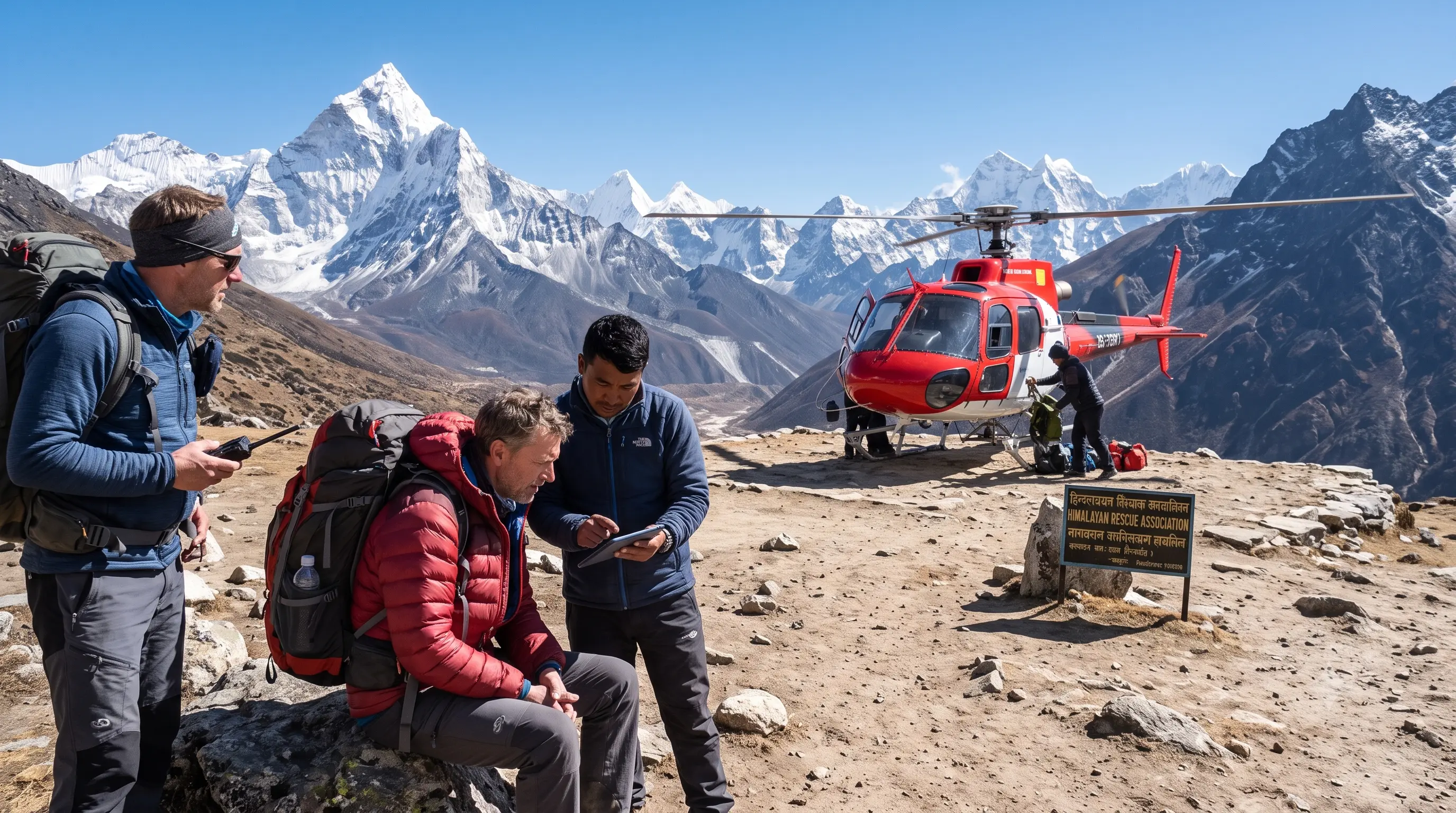
Helicopter Evacuation in Nepal: When It's Needed, How It
Works, and Cost
Helicopter evacuation is among the most important emergency
services that are available for trekkers in Nepal’s mountainous regions. In
case of altitude sickness, severe injury, or any other unexpected emergency that
requires urgent medical assistance, a helicopter evacuation would offer a quick
mode of transport to a facility where the victim can receive medical attention.
Due to the fact that not all trekking routes are easily accessible by roads and
have medical facilities nearby, helicopter evacuation may make the difference
between life and death for the victim. However, there are high charges
associated with such an evacuation, and it should be done well planned.
·
When It's Needed
Helicopter evacuation should only be considered when a trekker
is suffering from any problem that may not be manageable while they are still
on the trek. Most commonly, it is due to very dangerous altitude sicknesses
called HACE and HAPE (High Altitude Cerebral and Pulmonary edema). Helicopter
evacuations are also considered in cases where the trekker is having any injury
or an illness like a fracture, head injury, spinal injury, stroke, heart
attack, infection, or any other critical case. In places where there are no
roads and medical care facilities, such as Everest, Manaslu, Kanchenjunga,
Dolpo, and some areas of Annapurna, helicopter evacuation is the fastest and
easiest way to evacuate.
·
How It Works
Evacuation procedure starts with a call from a trekker, guide,
or trekking company to a helicopter rescue service operator or emergency
coordination office. It is determined whether it is possible to send the
helicopter depending on the health condition of the person, his or her
location, weather conditions, and the possibility of landing. In case the
trekker has travel insurance that covers the cost of helicopter rescue, an
insurance company is called up to give permission for the evacuation and to pay
for it directly to the helicopter rescue service operator. Then the helicopter
is sent to the nearest available place of landing to take the patient to the
hospital.
·
Cost
A helicopter rescue operation in Nepal would cost around USD
4,000 - 10,000, though sometimes the cost could be higher depending on where
and how complicated the rescue will be. It will depend on various elements like
the distance and height of the flight, weather, amount of fuel needed, and the
remoteness of the trekking destination. Rescues in areas such as the Everest
Base Camp and Upper Dolpo usually cost more than rescues in low-altitude
destinations. Trekkers who have travel insurance plans that cover high-altitude
treks and helicopter evacuation will normally have their evacuation expenses
covered by the insurance plan, but they will need to pay for all other expenses
incurred.
Does Travel Insurance Cover Altitude Sickness and
Helicopter Rescue?
In short, yes, many travel insurance packages provide coverage
for altitude sickness and helicopter evacuation in case of emergencies in
Nepal; however, that depends on whether the insurance package covers you for
high-altitude trekking. There is no uniformity in the type of coverage among
insurers, and hence it is important to review your travel insurance package
before embarking on the journey. Some insurance companies offer cover for
trekking at certain altitudes, whereas some even offer cover beyond 6,000
meters. In case your insurance does not cover your altitude or lacks coverage
for an emergency air rescue, you will end up paying hefty bills for the medical
treatment and evacuation.
Most insurance companies will take care of any medical costs,
hospitalization, helicopter rescue, or medically needed evacuation in case of
severe altitude sickness. Nevertheless, they usually prefer that trekkers stick
to proper trekking and seek medical assistance immediately if they start to
feel the symptoms of severe altitude sickness. Going up, even if one clearly
shows symptoms of severe altitude sickness, may create problems with insurance
company claims. In many cases, it is the rescue company or trekking agency that
calls the insurance company to get the approval for the rescue operation.
Before buying travel insurance, make sure that your insurance
plan includes your maximum trekking height, emergency helicopter transport,
search and rescue services, medical treatment, hospitalization, and
repatriation if required. It is also advisable to have digital and paper
versions of your travel insurance information, emergency contact information,
and insurance policy details during your trek. With proper insurance coverage,
you will not only be financially protected but will also have easy access to
any emergency help required at all times.
What to Do If You Develop Altitude Sickness
Suffering from altitude sickness does not necessarily spell the
end for your trekking adventure, but it certainly demands urgent attention.
What is of prime importance in this regard is that one must detect the symptoms
and react appropriately, rather than attempting to endure them. In mild forms
of altitude sickness, taking some rest along with acclimatization may help one
recover from the illness. But in the case of a more serious form of altitude
sickness, there is always a risk to life. It is imperative for every hiker to
be aware of how to cope with the problem. What to do if you develop altitude
sickness:
·
Stop the process of climbing up and do not
ascend to a higher altitude until all symptoms disappear.
·
Rest at your present altitude to allow your body
to adjust to the altitude before proceeding.
·
Drink lots of water and consume light but
energy-giving food in order to stay hydrated and energized.
·
Let your trekking guide, companions, or the
staff of the lodging know as soon as possible about your symptoms.
·
Observe carefully the symptoms that you have,
and if they intensify instead of going away, take the necessary steps
immediately.
·
Take altitude sickness drugs such as
acetazolamide (Diamox) only if this has been recommended by your physician.
·
Do not take alcohol, smoke, or overexert
yourself physically, as these activities will intensify symptoms and delay
acclimatization.
·
Immediately descend to a lower altitude in case
of worsening or non-disappearing symptoms, even when you rest.
·
Resort to oxygen therapy in case of difficulty
in breathing or if there is a lack of oxygen.
·
Make sure to get yourself medically attended to
as quickly as possible if you start experiencing signs like confusion, loss of
coordination, breathing difficulty, chest pain, or vomiting.
·
Get an air ambulance if you cannot descend on
foot, or the medical team advises you to be rescued immediately because of
altitude sickness.
·
Do not neglect your health or keep walking even
when you don’t feel well, as it may cost you your life in the end.
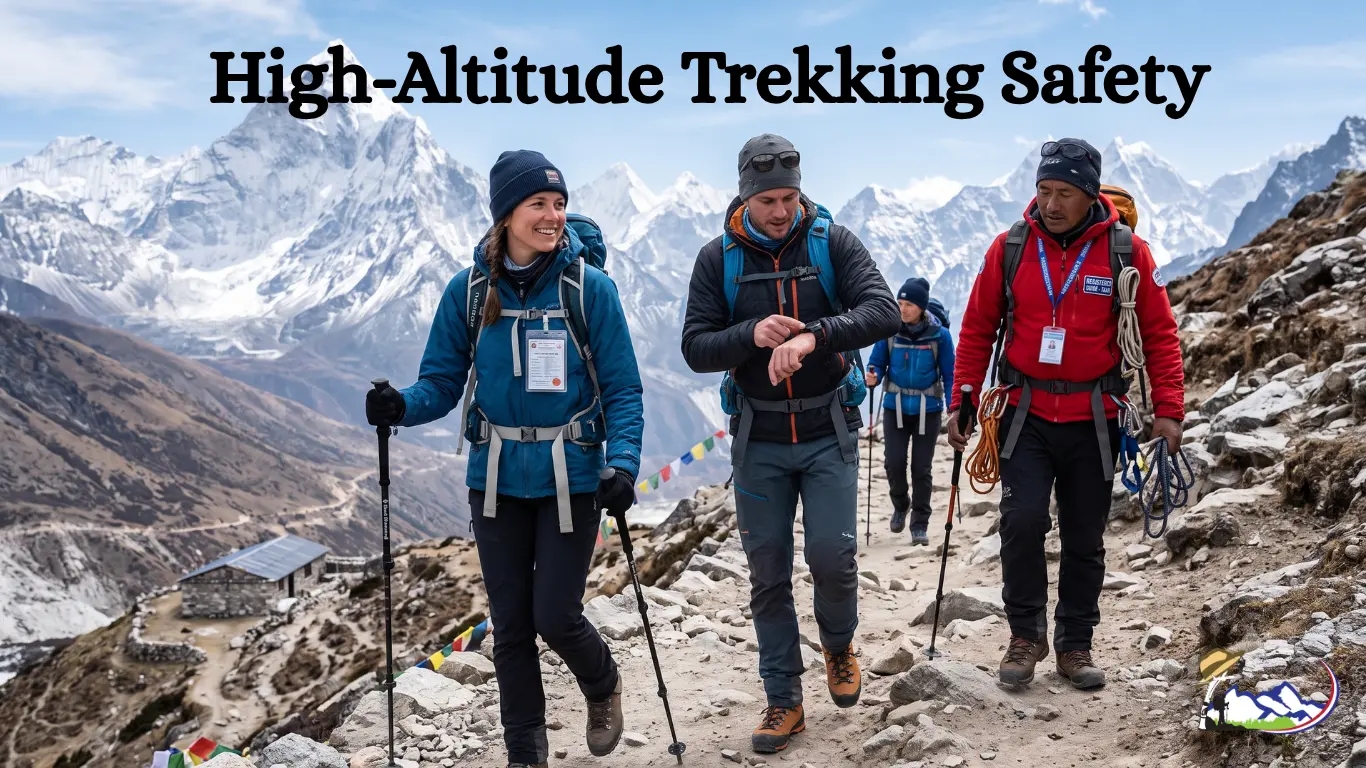
Essential Tips for Staying Safe at High Altitudes in Nepal
Traversing the terrain of Nepal, which comprises the most
spectacular and breathtaking views in the Himalayas, can be quite a memorable
adventure, but high-altitude areas require you to plan carefully and make sound
decisions. With higher elevations come lower oxygen levels in the air, causing
your body to adjust to these changes. In going to such places as the Everest
Base Camp, the Annapurna Circuit, Manaslu, and others, simple safety measures
will ensure that your chances of suffering from altitude sickness and other
emergencies are considerably lower. Essential tips for staying safe at high
altitudes in Nepal:
·
Arrange for acclimatization days on your
trekking itinerary.
·
Keep yourself hydrated by consuming adequate
amounts of water during the trek.
·
Ascend slowly and do not gain excessive sleeping
altitude on the same day.
·
Consume healthy food that is rich in
carbohydrates to stay energized.
·
Maintain a consistent pace without rushing to
your destination.
·
Educate yourself about the early signs of
altitude sickness and check yourself every day.
·
Do not take headaches, nausea, dizziness, and
excessive fatigue lightly.
·
Descend immediately in case your condition
becomes serious and worsens.
·
Avoid alcohol consumption, smoking, and taking
sleeping tablets.
·
Wear layered clothing to be prepared for
changing mountain weather conditions.
·
Have an adequately packed first aid kit,
important medicines, and a pulse oximeter along with you.
·
Discuss with your physician regarding preventive
medicine such as Acetazolamide (Diamox) before the trek.
·
Trek with a professional guide or trekking
service, especially on off-beat and high-altitude trails.
·
Monitor the weather and be ready to make
alterations in case the weather gets too risky for you to continue.
·
Get comprehensive travel insurance that includes
trekking at high altitudes and emergency air evacuation if needed.
·
Always carry your emergency numbers and other
documents in hard copy as well as digital form.


Commentaires
post comment